
The embassy interview for a U.S. family visa: what to expect and how to prepare
In short
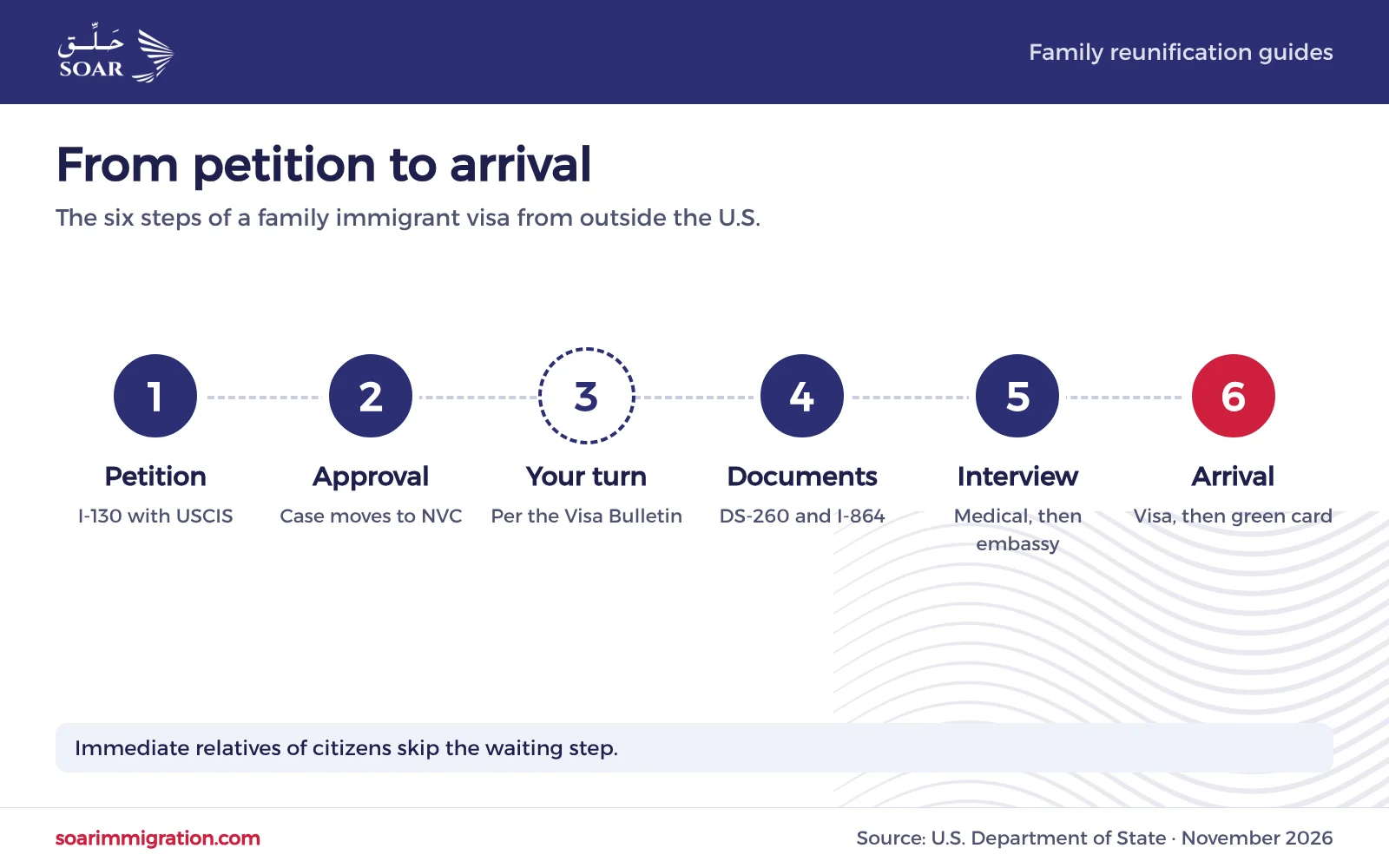
- The interview is the last step before the visa. It takes place at the U.S. embassy after your file is complete at the National Visa Center.
- Before it, you need a medical exam with a doctor approved by the embassy.
- Questions are usually simple and direct. They check the relationship and the accuracy of your file.
- Honesty and consistency matter more than any “perfect answer”.
When is the interview scheduled?
Once your turn is current in the Visa Bulletin (for preference categories) and your file is complete at the National Visa Center (NVC), with fees, the DS-260 and documents, the embassy sends the interview date by email and through your consular account.
Since August 2026, many immigrant visa interviews worldwide have been rescheduled while consular officers train on new “public charge” standards. If your appointment is cancelled or postponed, that does not mean the case is refused. A new date will be set.
Documents to bring
- A passport valid for at least six months beyond your expected entry date.
- The interview letter and the DS-260 confirmation page.
- Two passport photos to U.S. specifications.
- Originals of the civil documents you uploaded to NVC: birth certificate, marriage certificate and police certificate, with translations.
- The medical exam results, if the doctor gave them to you.
- A copy of the Affidavit of Support I-864 and the sponsor’s recent income documents.
- For marriage cases: additional evidence of a genuine marriage.
The State Department lists the accepted civil documents for each country in detail, so check your country’s list before the appointment.
The medical exam
It must be done with a doctor approved by the U.S. embassy in your country, and no other doctor. It includes a general exam, tests and a review of your vaccination record. Book it early, as appointments can fill up weeks before the interview.
Common questions by category
Short answer: the consular officer asks about your relationship to the sponsor and the information in your file. They are not trying to trip you up, only to check consistency.
Marriage cases:
- How did you meet, and when did you first meet in person?
- When and where was the wedding, and who attended?
- Where does your spouse work and live?
- How do you stay in touch, and how often have you met since the wedding?
Parents and children:
- Where does your son or daughter live in the U.S., and since when?
- What does the sponsor do for work?
- Where will you live after arrival?
Siblings:
- Questions about your shared parents, and about family members included in your case.
Practical tips for the day
- Be honest. If you don’t know an answer, say so clearly rather than guessing.
- Review your file beforehand, especially dates and addresses in the DS-260.
- Answer only the question asked, briefly and clearly.
- Keep your papers in one folder in a logical order.
- Follow the embassy’s rules on devices and bags, and arrive before your time.
What happens after the interview?
- Approval: your passport is kept to print the visa and returned within days or weeks. The visa is usually valid for six months.
- Request for more documents or administrative processing (221(g)): this is not a refusal. You are asked to complete a document, or the case waits for further review.
- Refusal: you receive the reason in writing. Some reasons can be addressed, and that is where the lawyer assesses the options.
After entering the U.S., the green card arrives by mail at the U.S. address on file, once the USCIS immigrant fee has been paid.
Common questions
Does the sponsor attend the interview?
The sponsor does not need to attend embassy interviews. The interview is for the applicant and any family members included in the case.
Can the interview be in Arabic?
You can usually ask for the interview in your language, and many embassies in the region have Arabic-speaking staff or interpreters.
My interview was cancelled. Was my case refused?
No. A cancelled or postponed appointment does not mean the case is refused. Watch your email and consular account for a new date.
Can a case be refused because of the sponsor’s income?
More proof may be requested if the income is not enough. The usual fix is adding a joint sponsor, which we arrange with you before the interview.
Official sources
- U.S. Department of State: The immigrant visa process
- U.S. Department of State: Medical examination
- U.S. Department of State: Documents by country
- USCIS: Affidavit of Support I-864
This guide is general information, not legal advice. Legal advice and representation come from a licensed U.S. immigration lawyer. Laws, fees and dates change often, so always check the official sources.