
The U.S. Visa Bulletin explained: November 2026
In short
- The U.S. State Department publishes the Visa Bulletin every month. It shows which cases in the preference categories have reached their turn.
- In November 2026, F1, F2B, F3 and F4 moved forward a full year for most countries.
- F2A is still nearly current, so most spouses and minor children of green card holders are not really waiting.
- Immediate relatives of U.S. citizens do not appear in the bulletin at all, because they do not wait in line.
Family category dates for November 2026
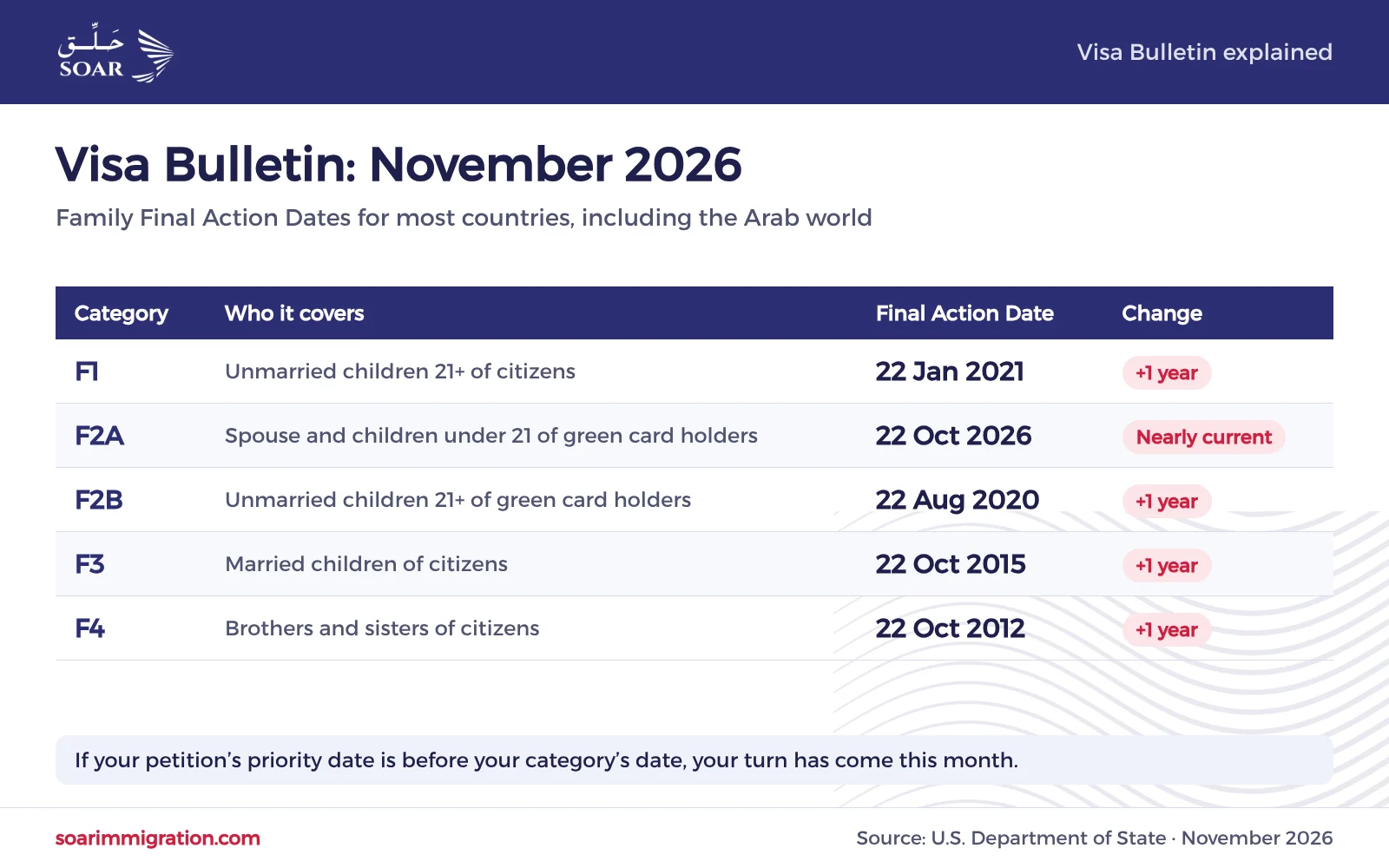
These are the Final Action Dates for most countries, including the Middle East and the Arab world:
| Category | Who it covers | Final Action Date |
|---|---|---|
| F1 | Unmarried sons and daughters of citizens, 21 or older | 22 January 2021 |
| F2A | Spouses and children under 21 of green card holders | 22 October 2026 |
| F2B | Unmarried sons and daughters of green card holders, 21 or older | 22 August 2020 |
| F3 | Married sons and daughters of citizens | 22 October 2015 |
| F4 | Brothers and sisters of citizens | 22 October 2012 |
How to read the table: compare the priority date on your petition’s receipt notice with your category’s date. If your date is before the date shown, a visa is available to you this month and your case can move to the interview.
What changed this month?
- F1, F2B, F3 and F4 moved forward a full year compared with October 2026 for most countries. Siblings, for example, moved from 22 October 2011 to 22 October 2012.
- F2A sits at 22 October 2026, so it is nearly current.
- For those adjusting status inside the U.S., USCIS announced it will use the “Dates for Filing” chart for all family categories this month.
Forward movement is good news, but it does not mean an interview will be scheduled at once. Since August 2026, many immigrant visa interviews at embassies have been rescheduled while consular officers train on new standards.
What is the Visa Bulletin?
A monthly publication from the U.S. State Department, usually released in the middle of the previous month. Because preference categories have a limited number of visas each year, the bulletin sets a “cut-off date” for each category: anyone whose petition was filed before that date has reached their turn.
Final Action Dates vs. Dates for Filing
- Final Action Dates: when the visa can actually be issued or the case finally approved.
- Dates for Filing: when you can start preparing the case and submitting documents early, before your turn for a final decision.
For those outside the U.S., the National Visa Center uses the Dates for Filing chart to invite you to prepare documents, then the Final Action chart to schedule the interview.
What do “C” and “U” mean?
- C (Current): the category is current, so a visa is available to everyone regardless of priority date.
- U (Unavailable): no visas are available in this category this month.
Why do dates sometimes move slowly, or go backwards?
Dates move with demand and with the number of visas left in the fiscal year. If demand rises, a category can stand still for months or retrogress. There is no official way to predict movement precisely, and forecasts online are estimates only.
Common questions
When is next month’s bulletin released?
Usually between the middle and the end of the current month. We update this page after each bulletin.
I am a U.S. citizen’s spouse. Why can’t I find my category?
Immediate relatives of citizens are not subject to the annual limit, so they don’t appear in the bulletin and don’t wait in line.
My date is now current. What do I do?
Make sure your fees and documents at the National Visa Center are complete. If the file is complete, it is waiting for an interview date from the embassy.
Are the dates different for Arab countries?
No. All Arab countries follow the “all chargeability areas” column. The separate columns are for China, India, Mexico and the Philippines.
Official sources
- U.S. Department of State: Visa Bulletin
- USCIS: Which chart applies this month
- U.S. Department of State: The immigrant visa process
This guide is general information, not legal advice. Legal advice and representation come from a licensed U.S. immigration lawyer. Laws, fees and dates change often, so always check the official sources.