

U.S. family reunification from Egypt: embassy, documents and timeline in 2026
In short
- The immigrant visa interview usually takes place at the U.S. Embassy in Cairo.
- Embassy Cairo is processing visas normally and did not suspend services in 2026.
- Egyptians follow the “all chargeability areas” column of the Visa Bulletin, so there is no extra wait because of nationality.
- Immediate relatives of U.S. citizens do not wait in line. Other categories wait according to the Visa Bulletin.
Where is the interview from Egypt?
The U.S. Embassy in Cairo kept processing visas throughout 2026, and was one of the few embassies in the region that did not suspend routine services during the March escalation.
Embassy Cairo also processes immigrant visas for residents of Sudan.
Are there restrictions on Egyptians in 2026?
Egypt is not on the Presidential Proclamation 10998 list. It was included in the 75-country pause that began in January 2026, but a court struck that pause down on 21 August 2026 and the State Department confirmed it is no longer in effect.
Since August 2026, many immigrant visa interviews worldwide have been rescheduled while consular officers train on new “public charge” standards. This is a general measure, not specific to Egypt.
Documents needed from Egypt
Alongside the general documents (passport, birth certificate, marriage certificate where needed, photos, medical results and the sponsor’s Affidavit of Support), everyone over 16 needs a police certificate:
- The Criminal Status Record (Saheefat al-Hala al-Jina’iyya) from the Egyptian Ministry of Interior, with an English translation. Those living outside Egypt usually request it through the Egyptian consulate in their country of residence.
- A certificate from every country you lived in for more than six months after age 16.
All documents not in English need an English translation. The State Department publishes the accepted documents for each country in its documents-by-country guide.
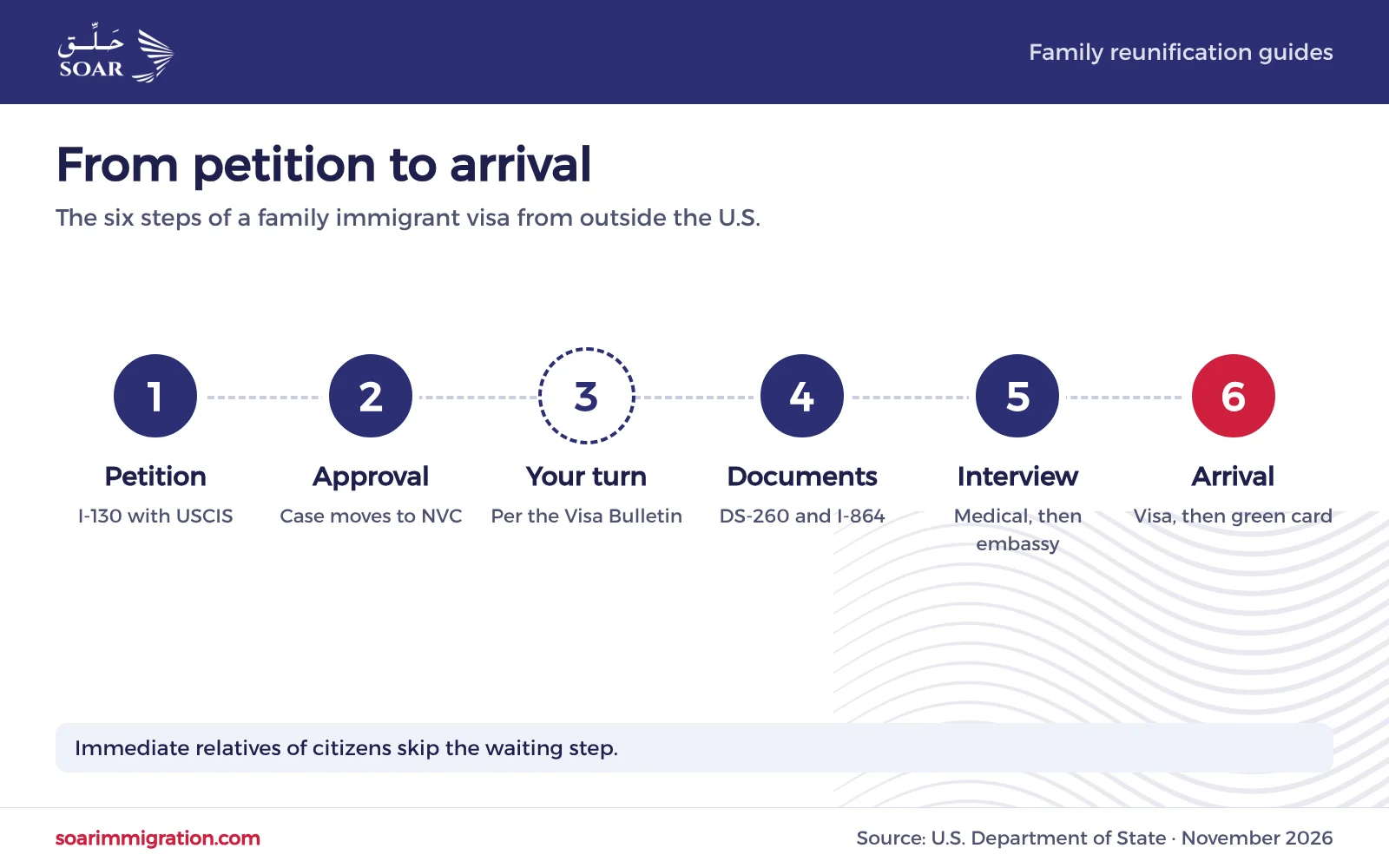
How long is the wait?
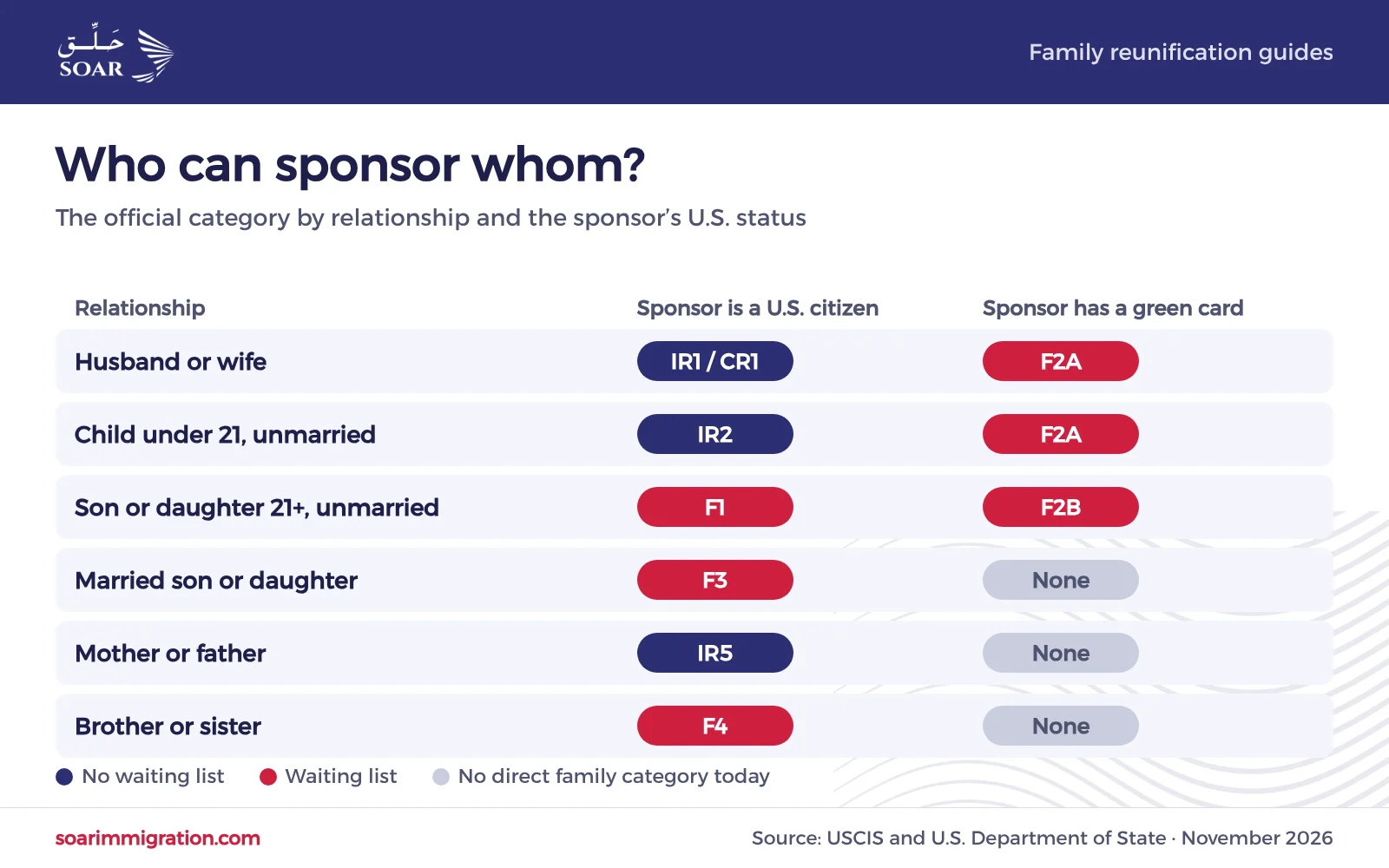
The wait does not depend on which Arab nationality you hold, since all Arab countries follow the “all chargeability areas” column. Immediate relatives of citizens don’t wait in line, spouses and minor children of green card holders wait a very short time today, and siblings wait more than a decade.
Details in How long it takes, and the latest dates in the Visa Bulletin explained.
How to start
The case always starts with your relative in the U.S., who files Form I-130 for you. Before that, find your official category with the route checker, then book a call where we explain the steps, fees and the lawyer’s role. For the full picture, read the core family reunification guide.
Common questions
Can the interview take place outside Egypt?
Since November 2025, the interview must take place in the country of nationality or residence. If your relative lives legally in another country, the case may be transferable there after the lawyer’s assessment.
Was the immigrant visa pause for Egyptians lifted?
Yes. A federal court struck down the 75-country pause on 21 August 2026, and the State Department confirmed it is no longer in effect.
Is the wait longer because I am Arab?
No. All Arab countries follow the “all chargeability areas” column of the Visa Bulletin.
Official sources
- The U.S. Embassy in Cairo
- U.S. Department of State: Documents by country
- U.S. Department of State: Proclamation 10998
- U.S. Department of State: The immigrant visa process
This guide is general information, not legal advice. Legal advice and representation come from a licensed U.S. immigration lawyer. Laws, fees and dates change often, so always check the official sources.